
Table of Contents
As enterprises look ahead to 2026, the cyber threat landscape is evolving faster than ever.
According to Statista, cybercrime already costs businesses up to $10.5 trillion in 2025, with projections suggesting a rise toward $15.63 trillion by 2029. It illustrates a simple but urgent truth: the cost of ignoring evolving cyber threats far outweighs the investment in proactive defenses.
This blog compiles critical cybersecurity statistics and emerging trends to help your security team better anticipate threats, allocate resources effectively, and strengthen your defenses heading into 2026.
Top Cyber Attack Vectors to Watch in 2026
1. Artificial Intelligence (AI)-Driven Attacks and Automation
AI-driven attacks and automation are expected to pose increasing risks to organizations in 2026, both as a direct attack vector and as a driver of new deception tactics. Key trends include:
-
AI-enabled attacks are becoming more sophisticated and costly. In 2025, 16% of security breaches involved AI-driven attacks. While AI improves detection, its unauthorized use of Shadow AI and weaponization through Deepfakes has driven the average cost of a data breach to a record high of $4.63 million per incident. [Spacelift]
-
Deepfakes are emerging as a growing vector for fraud and cyber risk. In 2024, deepfakes contributed to nearly 10% of cyberattacks, with fraud losses ranging from USD $250k to $20m per case, suggesting that organizations face increasing exposure to AI-driven deception in 2026. [QBE Europe]
2. DDoS Attacks and Botnets
DDoS attacks and botnet activity remain a major disruption vector in 2026. Key trends include:
-
Enterprises are likely to face higher-frequency and larger-scale DDoS incidents. In 2024, 86% of terabit-level DDoS-related security incidents lasted over 10 minutes, illustrating the persistent threat of long-duration high-capacity attacks. [CDNetworks]
-
DDoS attacks will continue to accelerate year-over-year. 2024 saw a 23.26% year-over-year increase in DDoS attacks. [CDNetworks]
-
Bots will increasingly focus on APIs and exploit business logic vulnerabilities. Malicious bot attacks rose 38.58% year-over-year in 2024, with 40% targeting APIs, indicating the types of automation-driven attacks that are likely to intensify in 2026. [CDNetworks]
3. API Exploitation
APIs are becoming a critical vector for attacks in 2026, driven by rapid AI adoption, automation, and multi-cloud complexity. Key trends include:
-
Shadow and unmanaged APIs will create blind spots for attackers. The speed of AI deployment often exceeds the pace of API security adoption, leaving unmonitored endpoints exposed. Addressing this in 2026 will require continuous API discovery, policy enforcement, and monitoring of AI‑generated traffic patterns to ensure security keeps pace with automation. [CybersecAsia]
-
Post-authentication attacks will dominate API incidents. In 2024, 78% of API attacks occurred post-authentication, highlighting the need for behavior-based and context-aware monitoring in 2026. [CDNetworks]
4. Vulnerability Exploitation
Exploitation of infrastructure and digital identity vulnerabilities is expected to remain a dominant entry point for attackers in 2026. Key trends include:
-
Exploitation of known vulnerabilities will keep rising. 2024 saw a 35% year-over-year increase in attacks exploiting known vulnerabilities. [CDNetworks]
-
Network and unmanaged assets will increasingly be targeted. In 2025, over 20% of newly exploited vulnerabilities targeted network infrastructure, and it is projected to exceed 30% in 2026 as unmanaged assets become preferred footholds for lateral movement. [Forescout]
-
Credential abuse will continue to drive initial access. Digital identities remain a prime target. In 2025, credential abuse accounted for ~22% of initial access vectors, a trend expected to dominate the breach landscape in 2026. [Verizon]
5. Phishing & Social Engineering
Phishing attacks and social engineering attacks are poised to grow in sophistication and scale in 2026. Key trends include:
-
Phishing remains a top intrusion vector. By the end of 2025, phishing accounted for ~36–40% of all successful cyber intrusions, with projections for 2026 exceeding 42% globally. [Medium]
-
Advanced MFA bypass tactics and high-frequency social engineering will rise. Cybercriminals are moving beyond simple phishing to sophisticated vishing and social engineering, while zero-day exploits fuel extortion schemes. [Google]
-
Phishing-as-a-Service (PhaaS) amplifies enterprise exposure. The number of known PhaaS kits doubled in 2025, increasing both the frequency and scale of phishing incidents expected in 2026. [ITPro]
6. Ransomware & Extortion
Ransomware continues to pose systemic risk to businesses and consumers in 2026, with attacks targeting unpatched and misconfigured systems. Key trends include:
-
Attack frequency continues to accelerate. Ransomware is predicted to strike a consumer or business every 2 seconds by 2031 (43,200 attacks per day), up from every 11 seconds in 2021 (~7,850 attacks per day). [Cybersecurity Ventures]
-
Unpatched and misconfigured systems will drive the majority of attacks. In 2026, over 50% of ransomware attacks are projected to exploit unpatched or poorly patched systems, focusing on internet-facing applications, VPNs, and cloud based assets. [CompareCheapSSL]
-
Global prevalence remains high. As of 2025, ~63% of businesses worldwide were affected, suggesting that repeated or sustained ransomware threats will persist throughout 2026. [Statista]
Cybersecurity Statistics by Industry for 2026
| Industry | Key Threat Vectors | Supporting Statistics |
|---|---|---|
| E-Commerce | Bot attacks, API abuse, DDoS attacks |
Bot attacks increased 255.2% YoY (2024); 32% of attacks targeting e-commerce were API-related (2024); ~22% of major DDoS incidents targeted online retail (late 2025) |
| Gaming | DDoS attacks (L3/4 and L7) |
57.38% of L3/4 attacks and 31.32% of L7 attacks targeted gaming platforms (2024); Gaming cybersecurity market projected CAGR of 15.9% from 2026 |
| Healthcare | Ransomware, data breaches |
~40% of organizations expected to be attacked (2026); Avg breach cost $12.6M |
| Finance | Data breaches, deepfake-enabled fraud |
Avg breach cost > $6.08M(2026); 55% reported deepfake incidents (2025) |
E-Commerce
-
Bot attacks on ecommerce platforms are expected to remain a significant threat, with a 255.2% year-over-year increase observed in 2024. [CDNetworks]
-
APIs are likely to be prime targets. In 2024, API attacks accounted for 32% of all attacks targeting the e-commerce industry, followed by Gaming (21%) and Manufacturing (19%). [CDNetworks]
-
AI-enhanced Distributed Denial-of-Service (DDoS) attacks are projected to continue impacting ecommerce infrastructure in 2026, following late 2025 data showing ~22% of major DDoS incidents targeted online retail. [ITPro]
Gaming
-
Market growth drives increased investment and exposure. The gaming cybersecurity market is forecast to sustain a strong growth trajectory, with a projected CAGR of 15.9% from 2026 onward. [Verified Market Reports]
-
DDoS attacks dominate the threat landscape. In 2024, 57.38% of all L3/4 attacks and 31.32% of L7 attacks targeted gaming platforms. [CDNetworks]
Healthcare
-
Ransomware prevalence will remain high. Around 40% of healthcare organizations are anticipated to experience attacks in 2026. [ScienceSoft]
-
The financial impact of breaches is rising. The average cost per data breach in healthcare is projected to reach $12.6 million in 2026, highlighting the need for proactive security measures. [ScienceSoft]
Finance
-
Average breach costs are climbing. Financial sector breaches are expected to exceed $6.08 million on average in 2026. [Statista]
-
Deepfake attacks are accelerating. In 2025, 55% of financial organizations reported incidents, compared to 43% in other sectors, suggesting that 2026 will see continued growth in this type of sophisticated deception. [Axios]
Top 5 Emerging Cybersecurity Trends for 2026
1. AI as a Force Multiplier for Cyber Attacks and Defense
In 2026, autonomous AI agents will drive both cybercrime and cyber defense. While attackers deploy AI for adaptive phishing and real-time exploitation, defenders use AI for predictive detection and automated incident responses. This dual-use landscape makes AI a central focus for enterprise security strategy.
According to PwC, 36% of organizations prioritize AI investment as their top cyber budget item in 2026, and IDC forecasts security spending to grow toward $377 billion by 2028, highlighting AI’s strategic significance.
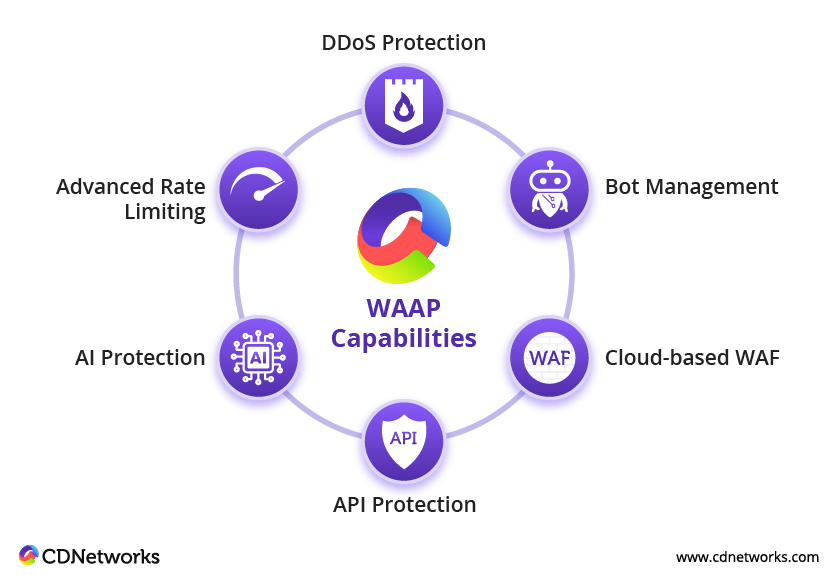
2. WAAP Becomes Strategic for API and Web Risk Management
Web Application and API Protection (WAAP) is going to be a must-have strategic cyber control in 2026. As APIs become the backbone of modern apps and microservices, organizations face a surge in attacks that traditional WAFs can’t handle alone. API traffic already accounts for the majority of web interactions, and API‑centric threats are exploding globally, driving demand for holistic WAAP platforms that combine API security, bot mitigation, and behavioral analytics.
3. Identity Security Takes Center Stage
Identity security is forecast to eclipse perimeter defenses as the primary battleground in 2026, driven by AI-powered deepfake and credential abuse threats. Deepfake impersonation, biometric spoofing, and model manipulation are bypassing traditional verification mechanisms, while machine identities now outnumber human accounts, creating a sprawling, poorly governed attack surface. Adversaries can exploit a single forged identity to trigger automated actions, making identity protection as strategic as cloud or network security.
4. Zero Trust Network Access Replaces Legacy VPNs
VPNs are increasingly liabilities as credential theft and product vulnerabilities turn remote access into a major breach vector. In 2026, Zero Trust Network Access (ZTNA) adoption accelerates, granting users access only to required applications, limiting lateral movement, and reducing the blast radius of compromised credentials. ZTNA is positioned as the preferred remote access model as legacy VPNs reach end-of-life.
5. Ransomware Evolves into AI-Driven Multi-Stage Extortion
Ransomware in 2026 goes beyond encryption, combining AI-driven automation, sensitive data theft, deepfakes, and psychological leverage. Even low-skill actors can launch sophisticated campaigns via ransomware-as-a-service, leveraging supply chain attacks and exploiting trusted workflows to maximize impact. Early 2025 data show 378 US organizations were targeted in just five weeks, with average recovery costs at $2.73 million per incident, underscoring the growing scale and intelligence of this threat.
Cybersecurity Statistics and Trends FAQ
1. What are Cybersecurity Statistics and Why is It Important?
Statistics are crucial because they transform abstract risks into actionable intelligence and financial impact assessments. In 2026, with cybercrime costs projected to exceed $10.5 trillion, data-driven insights allow CISOs to prioritize budgets, measure the efficacy of AI-driven defenses, and meet strict transparency mandates. Reliable stats provide the “ground truth” needed to train AI models and justify security ROI to stakeholders.
2. What are the Most Critical Cybersecurity Threats Predicted for 2026?
By 2026, the threat landscape will be dominated by Agentic AI-driven attacks, where autonomous AI agents can identify and exploit vulnerabilities in real-time without human intervention. Additionally, Deepfake-as-a-Service (DaaS) will make high-level social engineering and identity fraud more accessible to low-skilled attackers.
3. What are the Top 3 Cyber Security Trends for 2026?
In 2026, the cybersecurity industry is defined by three major trends: the expanding role of AI in both cyber attacks and defense, the rise of WAAP as a core control for securing web applications and APIs, and the shift toward identity security as a primary focus of enterprise protection strategies.