
Table of Contents
Streaming has become an essential part of our daily lives—from watching movies and TV shows to listening to music, playing games, and engaging with live broadcasts. The rise of modern streaming technology has completely transformed how audiences consume video content, and the momentum behind video streaming services shows no sign of slowing down.
In fact, recent research estimates the global market for streamed content to already exceed USD 670 billion in 2026 and is expected to surpass USD 2.49 trillion by 2032.
As internet connections improve, devices proliferate, and audience expectations evolve, the future of streaming promises to be more dynamic and interactive than ever before.
What is Streaming Technology?
Streaming technology allows digital video and audio to be transmitted over the internet in real time, without requiring the entire file to be downloaded first. Data is sent in small segments, or data packets, which are played immediately upon arrival. This process enables users to enjoy continuous playback—whether it’s a movie, live event, or online game—while the rest of the content loads seamlessly in the background.
Evolving User Demand and the Push for Smarter Streaming Technologies
Streaming has become the primary way people consume media worldwide. With audiences expecting instant access, ultra-high quality, and more personalized experiences, platforms are under constant pressure to evolve. This accelerating demand is not only reshaping delivery infrastructure but also redefining what “streaming” means today.
Overview of Modern Streaming Platforms
To understand how platforms are adapting, it’s essential to look at the growing diversity of streaming platforms.
The industry has expanded far beyond traditional on-demand video—encompassing live broadcasts, interactive streams, social-driven formats, and immersive content experiences.
Each type of streaming serves distinct user behaviors and engagement models, yet their boundaries are rapidly blurring.
| 📺 Overview of Modern Streaming Platforms | ||
|---|---|---|
| Category | Description | Examples |
| Video on Demand (VoD) Platforms | Offers movies and TV shows that can be watched anytime, anywhere. | Netflix, Amazon Prime Video, Disney+ |
| Live & Real-Time Streaming Platforms | Built around community engagement and real-time interaction through live or short-form content. | Twitch, YouTube Live, TikTok Live |
| Hybrid Platforms | Combine live and on-demand content from multiple sources, often acting as content hubs. | Roku, Apple TV, Pluto TV |
As these categories merge and evolve, new technologies are emerging to support them, laying the groundwork for the next wave of streaming innovation in 2026 and beyond.
8 Streaming Trends and Technologies in 2026
As streaming platforms converge and user expectations rise, the industry is entering a new phase of transformation. What began as a simple way to deliver on-demand video has evolved into a dynamic ecosystem driven by real-time interaction, AI-powered personalization, and intelligent infrastructure.
To stay competitive in this rapidly shifting landscape, streaming providers must anticipate what’s next.
The following nine trends highlight where the industry is heading in 2026—each shaped by emerging technologies, evolving business models, and new audience behaviors that will define the next generation of streaming innovation.
1. Live Streaming Becomes the Heart of Digital Engagement
Live streaming has become mainstream, driven by platforms like Twitch and YouTube Live. Real-time engagement—through chat, polls, and digital tipping—creates a sense of community and immediacy. Meanwhile, e-commerce live streaming, or live commerce, is also gaining momentum. Platforms such as Amazon Live and TikTok Live are transforming product showcases into interactive shopping experiences, blending entertainment with real-time shopping
For platforms, this shift means integrating interactive tools and ensuring ultra-low latency delivery through technologies like adaptive bitrate streaming and global edge networks. These systems help manage high concurrent traffic while maintaining consistent video quality.
🚀 How CDNetworks Can Help: To help platforms fully embrace the live streaming and live commerce trend, CDNetworks provides a Low Latency Streaming solution designed for real-time engagement. With support for WebRTC and advanced edge delivery, we reduce latency to under 500 milliseconds, enabling smooth interaction for live events, esports, and interactive broadcasts.
2. Short-Form Content Redefines Audience Behavior
Short-form videos popularized by TikTok, Instagram Reels, and Snapchat have redefined how audiences engage with streamed content. These formats emphasize immediacy, shareability, and participation, now influencing the evolution of streaming platforms.
Video streaming services are responding by adding social features such as real-time commenting, watch parties, and live chats. These social-media–inspired features foster community and connection among viewers, transforming traditional viewing into an interactive experience that boosts engagement and virality. As social interactivity becomes a defining factor of audience engagement, the ability to merge social connections with high-quality video content will shape the next generation of streaming experiences.
🚀 How CDNetworks Can Help: To help creators and platforms capitalize on the rise of short-form content, CDNetworks offers an Entertainment Live Streaming Solution designed for real-time interaction. With ultra-low latency of as little as 50ms and packet loss reduced by up to 70%, our integrated RTC Co-hosting and Chat Room Services enable real-time interaction through features like virtual gifts and live product displays. This all-in-one solution helps entertainment platforms deliver highly engaging, monetized short-form experiences that keep audiences connected anytime, anywhere.
3. Edge Computing and Content Delivery Networks (CDNs) Power the Next Wave of Global Delivery
With the surge of 4K/8K video, live global events, and immersive real-time content, infrastructure has become a key competitive differentiator. Multi-CDN strategies, edge caching, and distributed cloud storage now allow streaming platforms to deliver high-quality content efficiently while maintaining reliability during peak demand.
🚀 How CDNetworks Can Help: To help enterprises meet the growing demands of global content delivery, CDNetworks offers an Edge Application solution that brings computing power closer to end users.
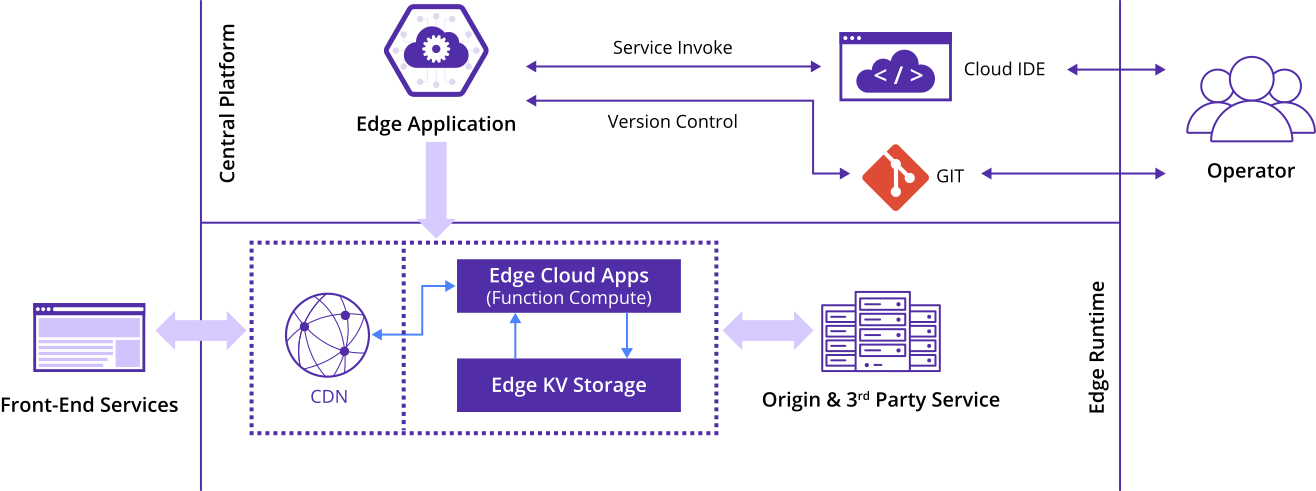
How CDNetworks’ Edge Application Works
4. Ultra-HD, Immersive, and Adaptive Streaming Raise the Bar for Quality
Audiences today expect more than just HD—they want 4K, 8K, and increasingly immersive experiences through VR and AR. To meet these expectations, technologies like adaptive bitrate streaming are becoming essential, ensuring consistent quality regardless of network speed.
Platforms that can dynamically adapt, minimize buffering, and maintain reliable playback across devices and networks are best positioned to retain loyal audiences. Ongoing research into adaptive streaming algorithms and digital-twin modeling of user behavior continues to push the boundaries of personalized, high-quality streaming experiences.
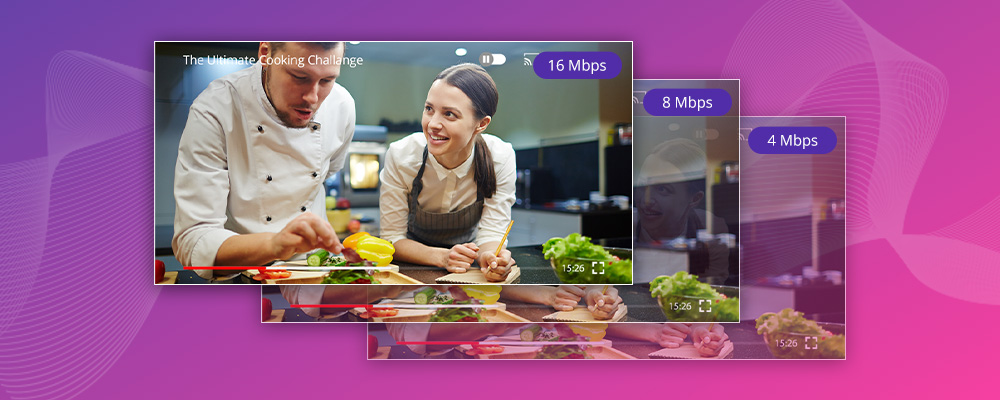
🚀 How CDNetworks Can Help: To help platforms deliver on the growing demand for ultra-HD and adaptive streaming, CDNetworks optimizes every viewing experience through Adaptive Bitrate Streaming (ABR) technology. Our Media Acceleration Live Broadcast ensures smooth and buffer-free live streams for sports, gaming, or corporate events—regardless of users’ device or connection quality. Meanwhile, our Media Acceleration VoD service intelligently adjusts video quality in real time, delivering crystal-clear playback that keeps audiences engaged wherever they are.
5. New Streaming Protocols Define the Future of Real-Time Delivery
While live streaming has been available for years, it’s becoming increasingly accessible to businesses thanks to the emergence of new, more efficient streaming protocols. HTTP Live Streaming (HLS) remains one of the most widely adopted options, valued for its compatibility across all devices that support the HTML5 video player.
Real-Time Messaging Protocol (RTMP) is another one that is widely used in many streaming applications, and it is increasingly being used for RTMP ingest, which allows users to take advantage of low-cost or open-source live encoders. Other new protocols are also becoming popular, such as the Quick UDP Internet Connection (QUIC), which addresses the problem of network transmission in the last mile through fast handshakes, authenticated and encrypted packets, and other features.
🚀 How CDNetworks Can Help: To help enterprises embrace the next generation of real-time streaming, CDNetworks is leading innovation with early adoption of the QUIC protocol, fully optimized for HTTP/3. Our upgraded platform supports all major QUIC versions, improving transmission efficiency, and reducing latency under challenging network conditions. Whether for live streaming, real-time applications, or video-on-demand, CDNetworks’ QUIC-powered acceleration delivers faster, more stable, and more resilient streaming experiences worldwide.
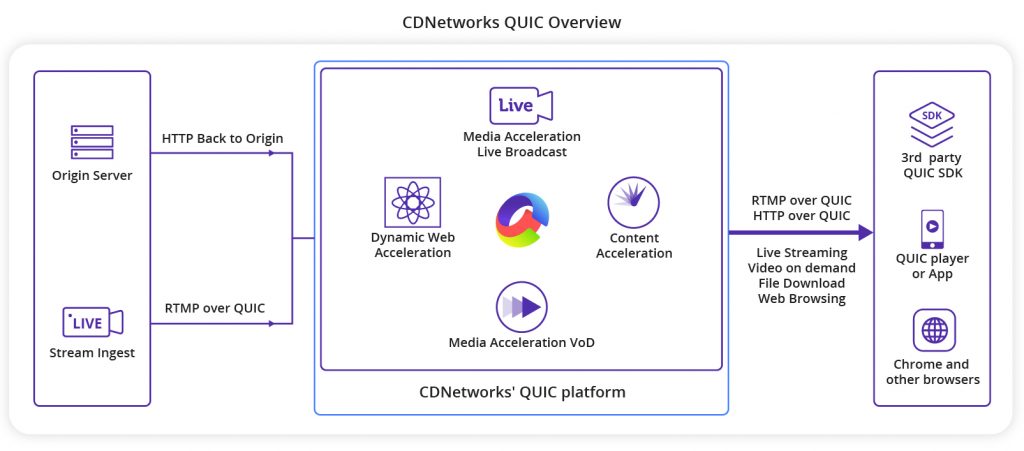
6. APAC Leads Global Growth in Streaming Adoption
The APAC region remains a major growth engine for the streaming industry. With rising internet penetration, mobile usage, and digital adoption, markets such as China and India are leading the way. According to recent forecasts, the APAC video market is set to soar, adding $16.2 billion in revenue by 2029.
🚀 How CDNetworks Can Help: To support enterprises expanding into APAC, CDNetworks combines deep regional expertise with extensive network coverage across Asia. Our localized delivery and compliance support helps global streaming providers expand into APAC markets efficiently, offering users reliable, fast, and secure streaming experiences tailored to regional conditions.
7. AI Revolutionizes Streaming Quality and Personalization
Artificial intelligence is reshaping the way streaming platforms deliver and optimize content. New AI-driven tools can now upscale lower-resolution videos, reduce noise, and improve clarity in real time, ensuring smoother and higher-quality playback for viewers. At the same time, AI enables automatic subtitle generation and adaptive compression, allowing content to be optimized for different devices and network conditions.
Beyond technical improvements, AI powers hyper-personalization. By analyzing viewer preferences and behavior, platforms can provide smarter recommendations and even guide future production decisions. This data-driven approach boosts engagement, retention, and long-term loyalty.
🚀 How CDNetworks Can Help: To help platforms harness the power of AI, CDNetworks leverages Advanced Media Technologies to enhance video quality automatically, transforming low-resolution or blurry content into sharp, high-quality streams—up to 6x higher resolution. This reduces manual work and operational costs while providing viewers with immersive 8K Ultra-HD experiences.
8. Platform Fragmentation Drives the Next Wave of Streaming Competition
As more streaming services enter the market, we’ve seen an increasing fragmentation of content across platforms. Exclusive deals mean content may be locked to one service, forcing viewers to subscribe to multiple services to access all the content they want.
One analysis found that six additional streaming services joined the top tier in the United States, expanding the list beyond Netflix, YouTube, Hulu, Prime Video, and Disney+. For media companies, differentiation is critical—offering unique content or bundled models can reduce “subscription fatigue”. Strategic partnerships and mixed monetization models (ads and subscriptions) are becoming common to balance user cost and engagement.
Key Takeaways from 2026 Streaming Trends
Across these 9 trends, a few clear themes emerge that are shaping the next era of streaming. From adaptive bitrate and ultra-HD experiences to AI-driven personalization, low-latency delivery, and edge computing, the ecosystem is evolving rapidly. Platforms that embrace these innovations will be able to deliver richer, more interactive experiences, reach wider audiences, and create lasting engagement.
By leveraging these advances, CDNetworks empowers organizations to build globally distributed, high-performance streaming infrastructures.
With our expertise in content delivery, edge computing, and media delivery, we help businesses reduce latency, maintain consistent video quality, and turn emerging streaming trends into actionable opportunities. Discover how we can help your business deliver next-generation digital experiences worldwide.
Streaming Technology FAQ: Insights, Examples, and Future Trends
1. What Is Streaming?
Streaming refers to the real-time transmission of audio and video data over the internet without needing to download files. Instead of storing the entire file, users receive continuous data packets that play immediately upon arrival. This approach allows instant access to video content, music, and even live events, revolutionizing how audiences consume media online.
2. How Does Streaming Work?
When you press play on a video streaming service, the content is divided into small data packets sent from the server to your device. These packets are then decoded and displayed as smooth, continuous playback. Modern technologies like adaptive bitrate streaming automatically adjust video quality based on your internet connection, ensuring minimal buffering even under unstable network conditions. This system makes it possible to enjoy online video and live streaming seamlessly on various devices.
3. How Does Video Streaming Work?
When you stream a video, the media file is divided into small data packets that are transmitted sequentially from the server to the viewer’s device. The player decodes these packets on arrival, displaying them instantly while continuing to receive more in the background. Advanced delivery methods, such as adaptive bitrate streaming, automatically adjust video quality depending on available bandwidth, ensuring the best possible viewing experience under varying network conditions.
4. What Is a Streaming Example?
A simple example of streaming is when you watch a movie on Netflix or listen to music on Spotify. These platforms use video streaming technology to send data continuously, so playback begins instantly instead of waiting for a full download. Another common use is live streaming, where platforms like YouTube Live or Twitch broadcast real-time events such as gaming, concerts, or webinars directly to audiences worldwide.
5. What Is a Video Streaming Example?
Netflix is one of the most well-known streaming technology companies, using adaptive delivery systems and robust CDNs to provide a consistent viewing experience across millions of devices. Other major platforms like Disney+, Amazon Prime Video, and Pluto TV use similar infrastructure—balancing paid subscriptions with free ad-supported channels to reach broader audiences.
6. What Are Some Examples of Streaming Technology?
Underlying streaming protocols are what make online video delivery possible. Common examples include MPEG-DASH, which adjusts video quality in real time based on the user’s network performance, and HLS (HTTP Live Streaming), widely used across browsers and mobile devices. Other technologies like RTMP and Real-Time Streaming Protocol (RTSP) remain important for live broadcasts where low latency is crucial. Together, these innovations ensure seamless viewing across different platforms and devices.
7. What Are the Benefits of Streaming?
Streaming eliminates the need for large downloads and provides flexibility to watch or listen anywhere. It also supports cross-device synchronization, allowing users to start on one device and continue with another without losing progress. With subscription-based models, viewers can access massive libraries of streaming media at a fraction of traditional broadcasting costs.
8. What Are the Downsides of Streaming TV?
While streaming offers convenience and flexibility, it does come with challenges. Poor internet connections can lead to buffering or reduced video quality. Additionally, the growing number of subscription-based services can make managing costs difficult for viewers. Some platforms are now adopting free ad-supported models to offer users more affordable access, balancing cost and accessibility without sacrificing viewing experience.
9. What Is the Difference Between VoD and Live Streaming?
VoD allows viewers to watch pre-recorded content whenever they like, while live streaming broadcasts events in real time. The two formats often overlap: platforms may provide VoD archives of previously live events. Understanding this distinction helps users select the right platform for their needs. Many modern media players support both VoD and live streaming, ensuring a seamless viewing experience across different content types.
10. What Is the Difference Between Streaming and Wi-Fi?
Streaming refers to the method of delivering media over the internet, while Wi-Fi is the wireless network technology that connects your device to that internet. In other words, Wi-Fi provides the pathway, and streaming is what travels through it. You can stream content through Wi-Fi, mobile data, or wired networks—what matters most is the strength and stability of the connection for smooth playback.
11. What Is Advanced Streaming Technology?
Advanced streaming technology refers to next-generation tools that optimize content delivery, quality, and user experience. This includes adaptive bitrate streaming, edge computing, and real-time analytics that monitor performance and adjust dynamically based on network conditions.
Emerging innovations such as AI-based video compression and predictive preloading are reducing bandwidth consumption while maintaining high-definition quality. At the same time, multi-CDN solutions are ensuring global reliability and faster delivery times, even in high-traffic environments.
12. What Is the Future of Streaming Platforms?
The future of streaming platforms lies in deeper personalization, immersive experiences, and smarter delivery technologies. As competition grows, services focus on AI-driven recommendations, interactive features, and seamless integration across multiple devices. In the United States, streaming consumption continues to dominate digital entertainment, with platforms expanding into gaming, sports, and live commerce.
13. How Is AI Improving Streaming Technology?
AI is increasingly integrated into video streaming technology, enhancing both performance and personalization. Machine learning models help predict user preferences, recommend relevant content, and optimize delivery by analyzing viewer data in real time. AI also improves video compression, stabilizes live streaming quality, and even helps detect copyright violations automatically, making content safer and more accessible.